

Term: 24 Oct. -7 Nov.2025
Venue:China, Hangzhou, China Academy of Art
China, Hangzhou, China Academy of Art, Zozan Campus Building 10 Exhibition Gallery,
Artists: Tochka: Takeshi Nagata, Kazuto Monno, Fukumi Nakazawa, Keita Kurosaka, Koji Yamamura, Sarina Nihei
Curators: Koji Yamamura, Gerben Schermer
https://mp.weixin.qq.com/s/mDMkxWRo_IDLfxlomc9hmg
道具は身体の延長と言われるように、それは人間の機能・感覚を拡張し、身体もまた同時に道具となる。
人が触れる道具──人間工学的視点から作られたハサミや椅子、また繰り返し使うことで手に馴染んでいく木製の道具など──は、使い手の人間との輪郭線を共有し、人がいなくてもその存在を感じさせる。その境界は次第に曖昧になっていく。産業革命以降の技術の大きな発展によって、人間の機能を大きく上回る道具が生まれ、人と道具の関係性は変化しており、その境界線は今もなお動き続けている。
私が描くのは、特定の機能や役割を持つ人間である。自らの身体を変形させ、自身の輪郭線を探るように、重力を感じながら動くその姿を線で描いていく。
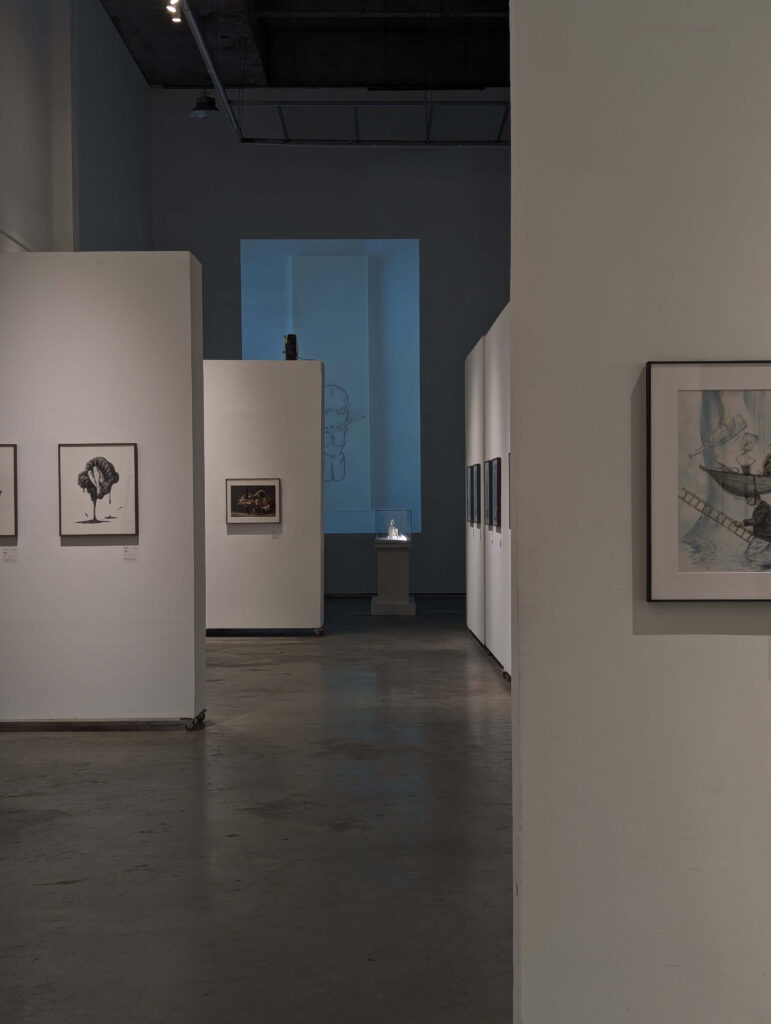
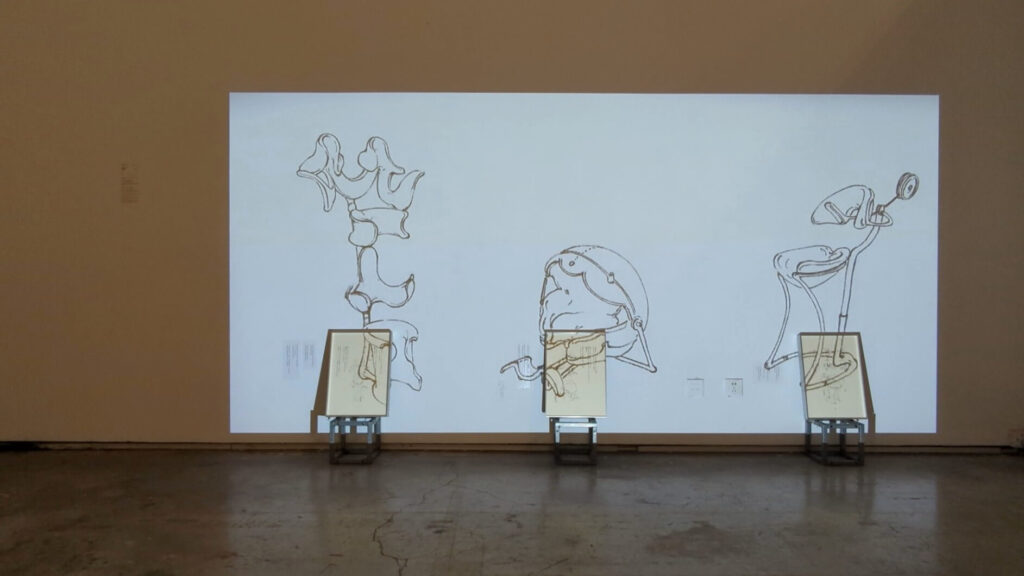
本展示で描かれた人間たちは、重なり、擦れ合い、押し出されることで身体の端に神経が集まってしまう存在である。重なることを前提とした形態は、繰り返し動くことで輪郭が摩耗し、機能を持ち続けるために、より適した動きを探り続けている。
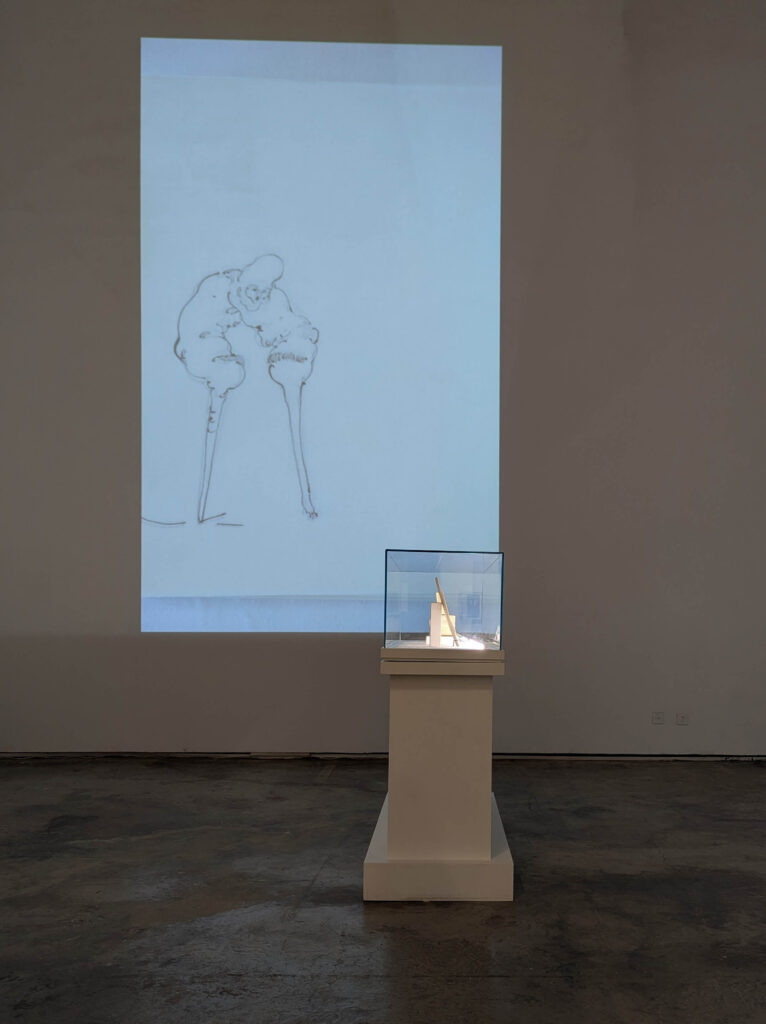
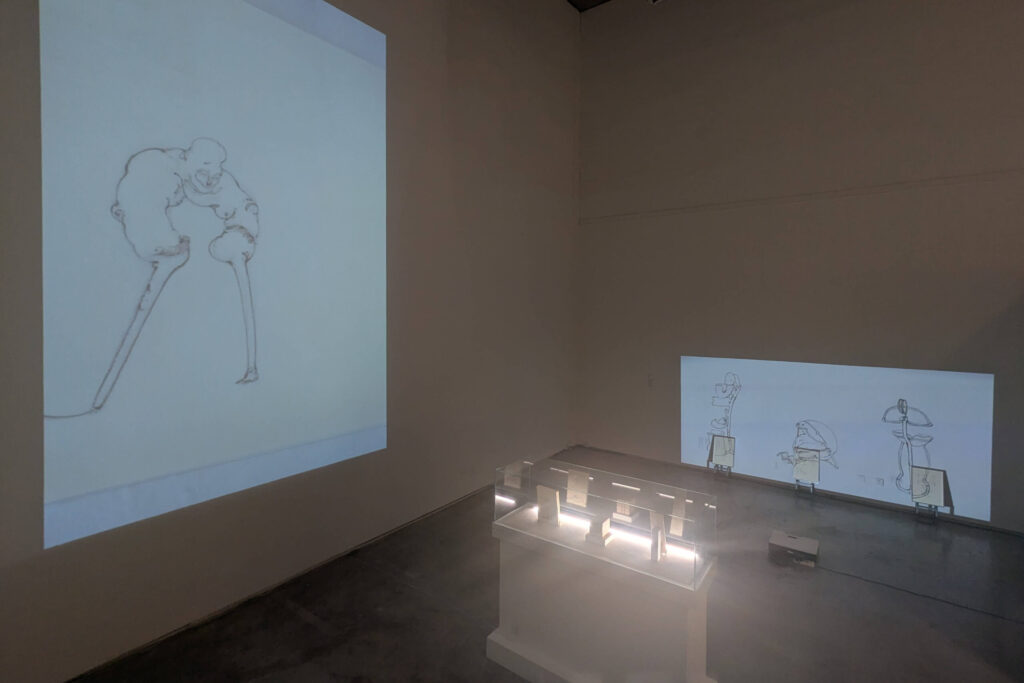
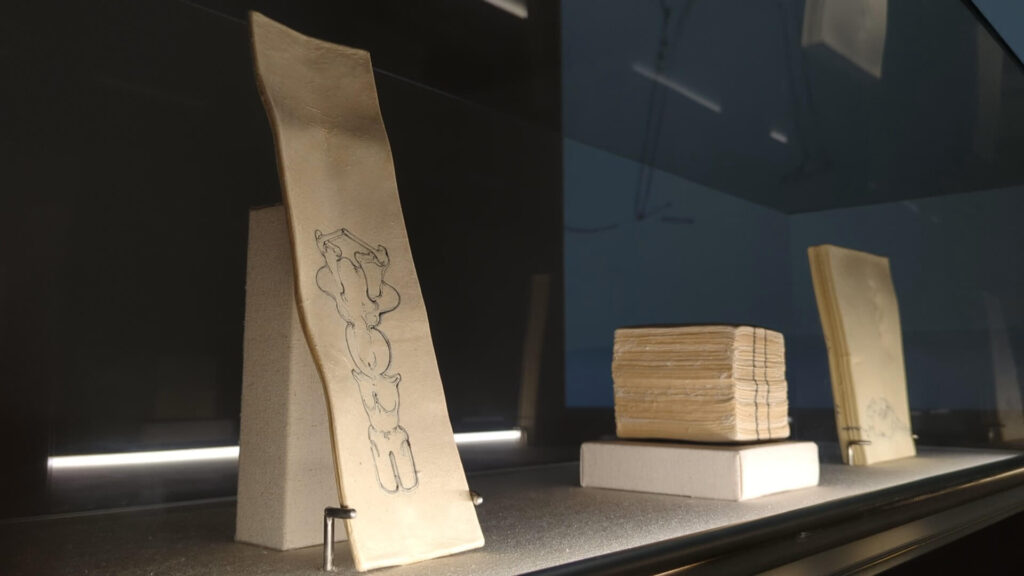
アニメーションとして描かれたドローイングは、のりによってすべてが固定され、その塊は厚みを持つことで時間軸を可視化している。それは“動かない肉塊”のようであり、すでに時間が止まってしまった人間の映像が、同じ空間に反射されている。
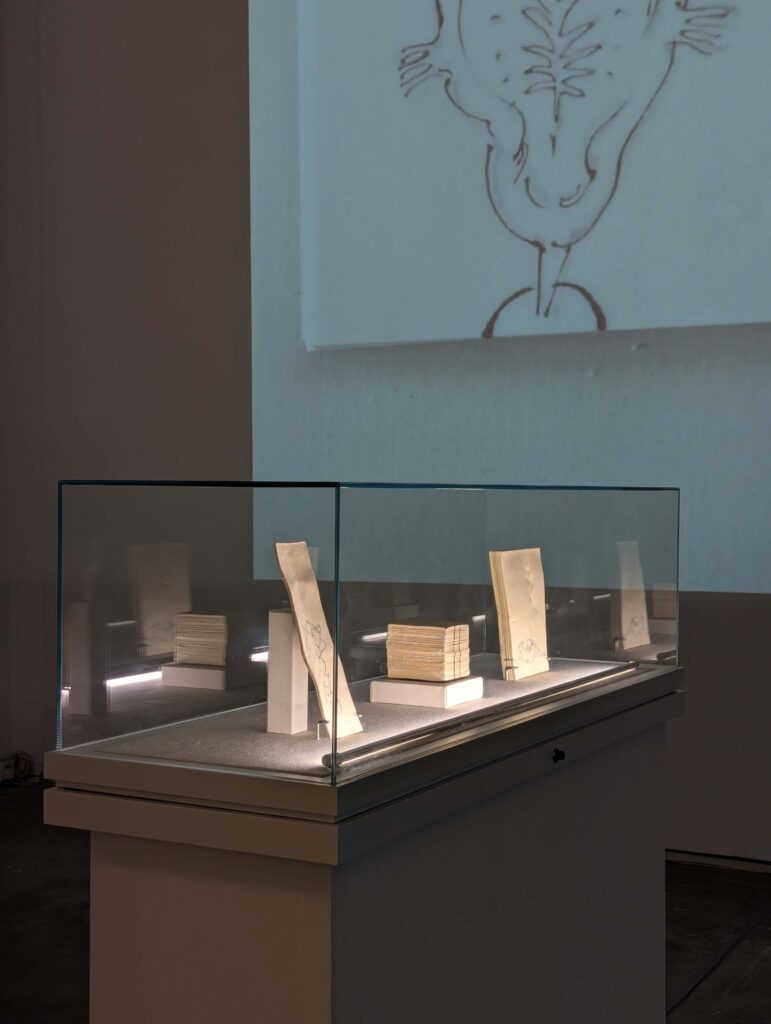
<座譜>ある特定の人間のためにデザインされた椅子。その座り方や体の動かし方を示す指示書が付属している。
映画の台本にも使用されていた謄写版画(ミメオグラフ)は、素人でも容易に複製が可能な技法である。この版画技法を用いて、不可解な形をした椅子とその指示書を印刷することで、大衆化を可能にできるかもしれない。
As tools are often described as extensions of the body, they expand human functions and sensations, while the body itself simultaneously becomes a kind of tool.
Objects that people touch—such as scissors or chairs designed from an ergonomic perspective, or wooden implements that gradually conform to one’s hand through repeated use—share the contours of their users. Even in the absence of the person, their presence can be felt, and the boundary between the two becomes increasingly blurred.Since the Industrial Revolution, rapid technological advancement has given birth to tools that far exceed human capacities, transforming the relationship between people and their instruments. The boundary between them continues to shift even today.
What I draw are human figures with specific functions and roles. They transform their own bodies, moving with a sense of gravity as if tracing the outlines of themselves—lines that explore their own contours.
The figures depicted in this exhibition overlap, rub against, and push one another, gathering nerves at the edges of their bodies. Their overlapping forms, assumed to be in constant contact, wear away their own outlines through repeated motion, seeking movements most suited to maintaining their function.
The drawings, animated and then fixed together with glue, become solid masses that give thickness—and thus visibility—to the passage of time. They appear as “immobile flesh,” while the image of that once-moving human being is reflected within the same space.
A chair designed for a particular person.It comes with a set of instructions that describe how to sit on it and how to move one’s body.
The mimeograph, a stencil printing method once used for film scripts, is a technique that allows even amateurs to reproduce copies with ease.
By using this printmaking process to reproduce the strangely shaped chair and its accompanying instructions, it may be possible to make them accessible to the public—to democratize what was once singular.
正如人们所说,工具是身体的延伸,它扩展了人的机能与感官,而身体本身也同时成为一种“工具”。
人所触及的器物——例如以人体工学为基础设计的剪刀与椅子,或因反复使用而逐渐贴合手形的木制器具——与使用者的身体轮廓相互重叠。即便没有人的存在,这些物也能让人感受到人的痕迹,而两者之间的界限因此变得愈发模糊。自工业革命以来,技术的迅速发展催生出远超人类机能的机械性装置,人与工具之间的关系由此发生了变化,那条界限至今仍在不断移动之中。
我所描绘的,是具有特定功能与角色的人体。它们改变自身的形态,带着重力而动,仿佛在以线条探索自身的轮廓。
本次展览中的这些人形彼此重叠、摩擦、推挤,使神经汇聚在身体的边缘。以重叠为前提的形态,在不断的运动中轮廓被磨损,为了维持功能,它们持续地寻找最合适的动作。
这些以动画绘制的线条图被胶水固定成块,随着厚度的生成,时间的轴线也被可视化。那仿佛是“静止的肉块”,而时间早已停止的人体影像,正被反射在同一个空间之中。
为特定的人设计的一把椅子。附带的说明书指示了坐姿以及身体的移动方式。
曾用于电影剧本的“油印版画(mimeograph)”,是一种即使非专业人士也能轻易复制的印刷技法。
如果使用这种版画方法来印制那把形状奇特的椅子及其说明书,或许能够让原本只属于个人的事物,转化为大众可以共享的形式。